
8 min read · March 2025
How to know when you're ready to start therapy — and what to expect
Introduction
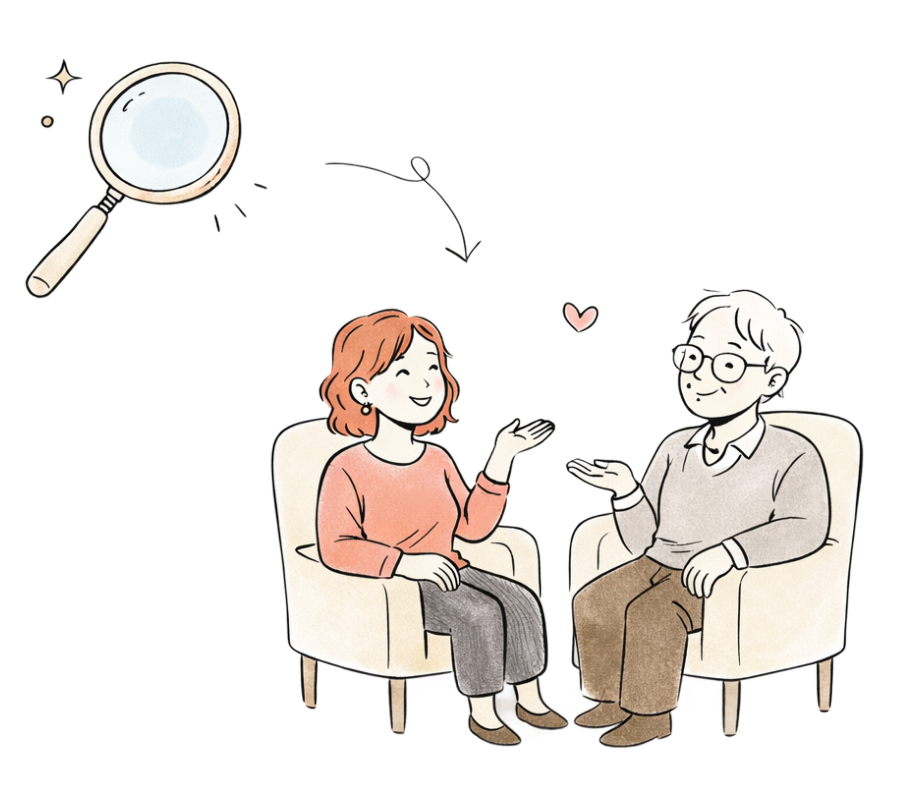
Starting therapy can feel like a big step. Many people wait until things feel "serious enough," while others wonder if their struggles even qualify. The truth is simple: you don't need to hit a breaking point to benefit from therapy.
 Image courtesy of Fauxels via Pexels
You don't need all of these. Even one can be enough.
1. You feel stuck in the same patterns You keep thinking, reacting, or behaving in ways that don't serve you, even when you try to change.
2. Your emotions feel overwhelming Stress, anxiety, sadness, or anger feel harder to manage than usual.
3. It's affecting your daily life Sleep, work, relationships, or motivation are starting to suffer.
4. You want to understand yourself better You're not in crisis, but you're curious about your thoughts, habits, and past experiences.
5. You've tried handling it alone Journaling, talking to friends, or self-help helped a bit, but not enough.
"Therapy isn't just advice or someone telling you what to do"
— Olivia Rhye, Product Designer
What to expect in your first session
The first session is usually about getting to know you.
- You'll talk about what brought you there
- The provider may ask about your background
- You can ask questions too
- No pressure to share everything at once
Think of it as a conversation, not a test.
How therapy actually feels over time
It's not always linear.
- Some sessions feel relieving
- Some feel uncomfortable (that's part of growth)
- Progress is often subtle at first
Over time, you'll likely notice:
- More clarity in your thoughts
- Better emotional regulation
- Healthier responses to situations
 Image courtesy of Michael Burrows via Pexels
Fit matters more than anything.
Look for:
- Someone you feel comfortable with
- A communication style that matches you
- A specialization that fits your needs
It's okay to switch if it doesn't feel right.
Final thought
You don't need permission to start therapy.
If something in your life feels off, heavy, or confusing — that's enough reason.
Starting therapy isn't a sign that something is wrong with you. It's a sign that you're paying attention.


